Review: (1) Àlvaro Enrigue on Cristina Rivera Garza
Cristina Rivera Garza was trained as an historian. As a writer, she works with the methodical care of a person who knows how to deal with archival information. Her novels don’t take a straight course devouring the distance between propositions and conclusions. They move in an organic way, constructing an argument out of blocks of different material girdled to a narrative core, moving the reader through all sorts of intellectual, moral, and formal paces.
In her first novel, No One Will See Me Cry, published in Spanish in 1999, Rivera Garza put in play two sets of documents: archival research about early psychiatric practices in the Manicomio General de la Castañeda—founded in 1910 in Mexico City with the never-achieved objective of treating mental illness with modern, humane methods and the early photographic material about women’s bodies produced at the time. The novel tells the damaged love story of a confined, functional woman perceived as dangerously independent and a very unbalanced but considered-sane photographer charged with visually recording the evolution of the patients. The introduction of documentation about early psychiatric procedures, notes on the first pornographic pictures shot in Mexico City, writings left by women locked up in La Castañeda, and doctors’ reports of the period lift the work out of the conventions of historical romance.
Like many writers of her generation with one foot in the academy, Rivera Garza seems to have been marked by the ideas of the American philosopher and critic Hayden White. In Tropics of Discourse (1978) he proposed that written history is shaped by the literary strategies of the era in which it was produced. This idea freed Latin American writers to treat documents like Christopher Columbus’ Letters or the chronicles of the Spanish Conquistadores as works of Renaissance literature. In 1990, Roberto González Echeverría’s Myth and Archive drew on this analysis by placing the origin of Latin American fiction in the travel logs and judicial affidavits left by the slow and tumultuous process of occupation of the American continent by the Spanish empire.
Rivera Garza has an iron loyalty to her working method, whose goal is to find what is significant for the present in ignored episodes from the past. As the political situation of Mexico become more and more asphyxiating for a population exhausted by the government’s failure to control the violence of organized crime, her narrative focus changed: her books became more defiantly political and more personal.
Her recent and still untranslated Autobiografía del algodón (2020) deals with the history of the once successful cotton fields on the Gulf coast where Mexico borders the United States, a region later desertified, both naturally and socially, because it was more useful as an industrial corridor for producing cheap appliances—and later synthetic drugs—for the unsatiable American market. The novel begins with a memorable recreation of the visit of the radical activist and extraordinary writer José Revueltas to a 1934 meeting of cotton workers striking in the remote town of Estación Camarón, and it envisions a possible moment in which José Revueltas and the grandfather of Cristina Rivera Garza—who was one of the striking workers—gazed into each other’s eyes. The core of the narration is necessarily fictional—who knows what José Revueltas did when he was not in workers’ meetings, or what conversations took place between the paternal grandparents of the author—but it is based in very dense archival records of agrarian unionization in northern Mexico, notes from the political papers of José Revueltas of the cotton workers’ strike, and his magnificent novel inspired by this event, El luto humano (1943)—published in English as The Stone Knife in 1947.
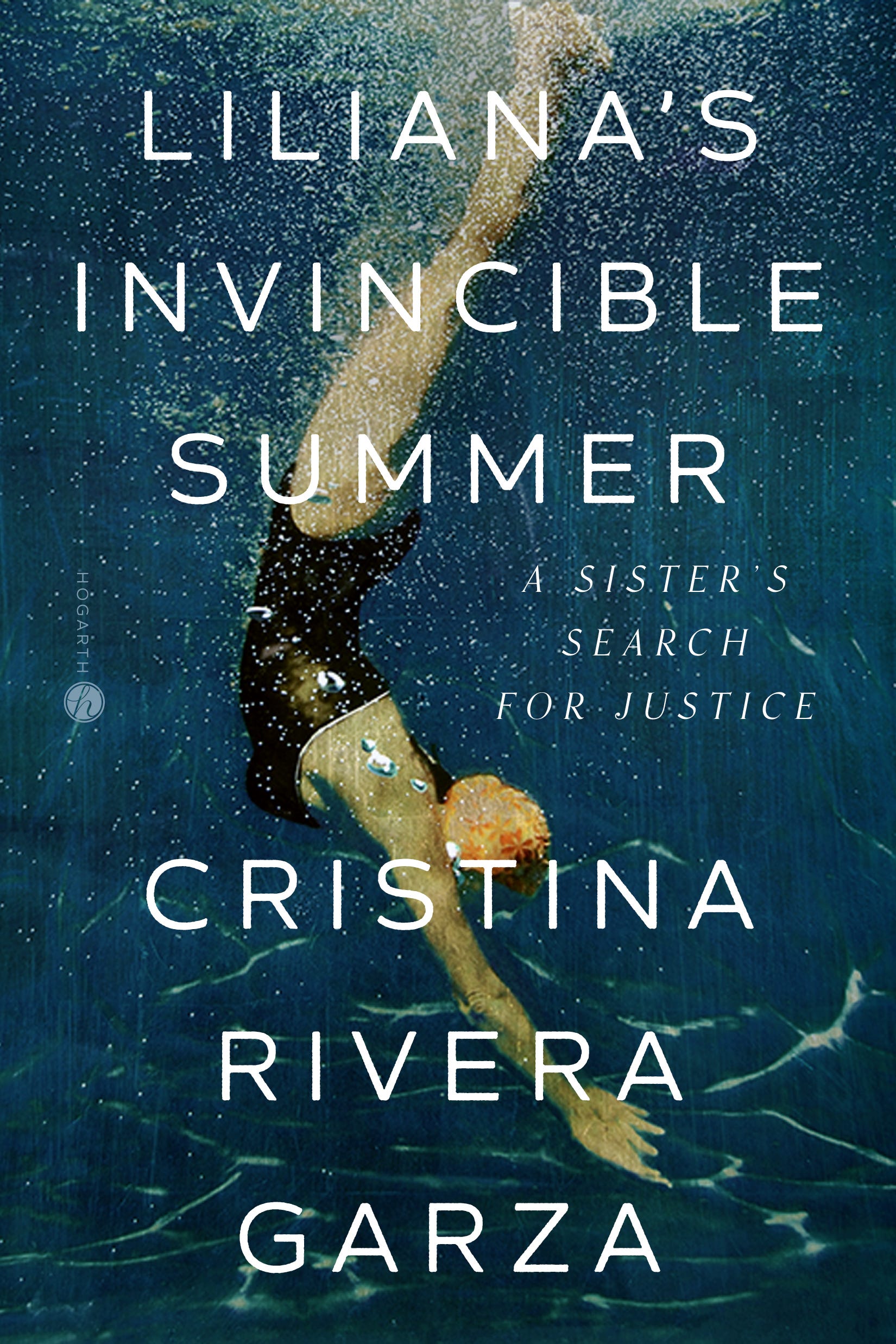
In The Invincible Summer of Liliana, just published in the United States, the author visits the heart-wrenching archive surrounding a tremendous personal story: the homicide of her sister Liliana, perpetrated by a jealous ex-boyfriend who, though identified early in the police investigation, ran away and died unpunished in California decades after the murder. The femicide of Liliana Rivera Garza went almost unnoticed by the press when it happened—July 1990—but, thanks to this book, has become emblematic of the failure of Mexican justice to prosecute crimes in which the victim is a woman.
In the novel Cristina Rivera Garza describes the days she herself spent bouncing between precincts and judicial records buildings in search of the closed file on her sister’s murder. Over this melancholic narration, in which Mexico City is lyrically portraited as a beautiful but devastated landscape, Rivera Garza constructs her story as a monument, pulling information from all sorts of sources: the police report that finally appears; the testimony of Liliana’s friends; scraps from a tabloid that made a sensitive follow-up to the case; Liliana’s diaries and letters; the boxes of objects she left; the architectural plan of the apartment where the crime was committed; and bibliographical notes on the literature of domestic violence and femicide.
The Invincible Summer of Liliana is not a journalistic book about the crime that led to the author’s sister’s death, nor is it a literary evocation of a life and the grief its vanishing produced, but something much more powerful that happens at the crossroads of narration and archive. A story, and all the data that needs to be known to be devastated by it. Catharsis—a sentiment strong enough to produce inner change—for a time when reality is amplified by the omnipresence of information.
This multidimensional way of practicing fiction—Rivera Garza’s novels are closer to Melville in Moby Dick than Cervantes in Don Quixote—also involves deviations into literary, anthropological, and political theory that sometimes advance, sometimes complicate the narrative. These interludes help to move her from one plot point to the next, since she tends to ignore nineteenth-century conventions of chronological progress, but they also imply that what cannot be said with the limited languages of storytelling and theoretical writing might materialize where fiction and nonfiction intersect.
Read Part Two of this post here
Àlvaro Enrigue is the author of five novels, three books of short stories, and one of literary criticism in Spanish; among these his novels Sudden Death and Hypothermia are available in English, and You Dreamed of Empire and Perpendicular Lives will appear in English in January. He was born in Mexico and lives in New York City.
Book Post’s Summer Reading of Middlemarch with Mona Simpson is underway! If you are not receiving weekly installments, check your account settings to make sure you on the list, and join us in the comments! For this Sunday (July 23) we are finishing Book Two (through Chapter 22). Still time to catch up!
Book Post is a by-subscription book review service, bringing snack-sized book reviews by distinguished and engaging writers direct to your in-box, as well as free posts from time to time to those who follow us. Thank you for your subscription! Your payment supports our writers and our effort to build a common reading culture across a fractured media landscape. Please help us to grow our audience by giving Book Post to a friend, sharing this post, or cheering us on social media.
Rehoboth Beach indie Browseabout Books is Book Post’s Summer 2023 partner bookseller! We partner with independent bookstores to link to their books, support their work, and bring you news of local book life across the land. We’ll send a free three-month subscription to any reader who spends more than $100 with our partner bookstore during our partnership. Send your receipt to info@bookpostusa.com. Read more about Browseabout’s story in here in Book Post.
Follow us: Instagram, Facebook, Twitter. Special Middlemarch posts on TikTok!
If you liked this piece, please share and tell the author with a “like.”

I’ve lived in LA for almost 40 years and late in life --but not too late--I recently decided to try to go deeper into Mexican history and literature. This post hits a sweet spot.
Loved learning about this author!