Review: Cynthia Zarin on Alan Garner
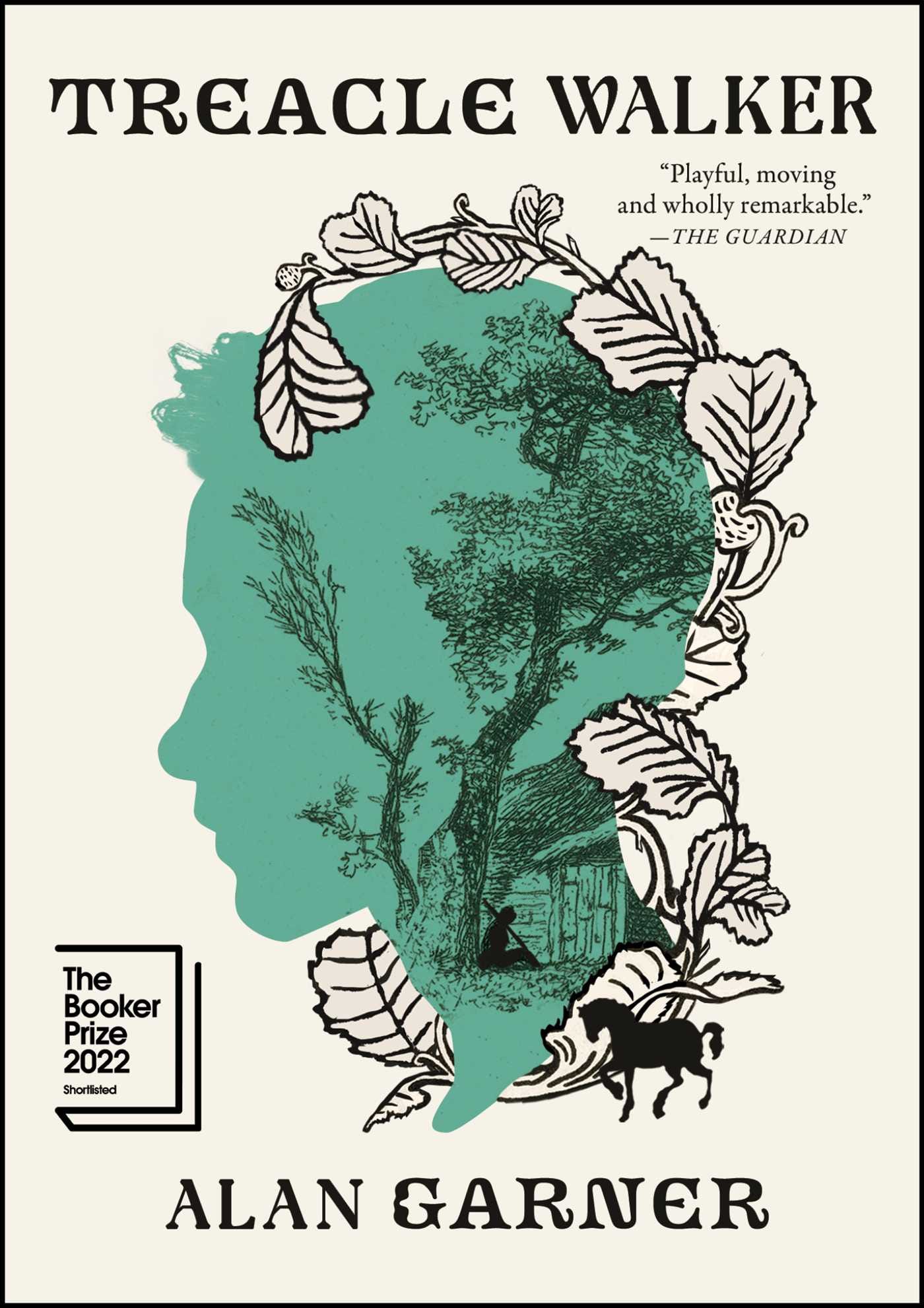
Treacle Walker, Alan Garner’s tenth novel, starts as most things do, in the middle. Joseph Coppock, a boy of about ten or twelve, peering through an upstairs window of his house—his own bedroom window—hears a ruckus out in the yard, and, poking his head far out, hears the sing-song of the rag-and-bone man before he sees him. What the reader doesn’t know yet is that the conveyance of this short book (short in pages, that is; almost at once it’s clear that the story, occurring as it does in more than one dimension, is not brief at all but rather infinite), the apparatus of the story, is aural as well as linear: we hear what’s coming before we see it, then hear it echo afterwards. I’m not sure I know of any other book that does this. I remember opening Portrait of an Artist as a Young Man when I was very young, at the suggestion of a whimsical grandfather, and finding it not to be writing as I knew about writing, one word following another, train cars full of syllables headed to a destination; it was music, closer to the scarifying abbreviated world of nursery rhyme. If young Stephen on page two does not apologize for a misdeed, eagles will come and pull out his eyes— “Pull out his eyes. / Apologize, / Apologize,/ Pull out his eyes,” says the page.
Alan Garner is practically unknown in this country, but in the UK he is regarded by his peers as the finest fantasy writer since J. R. R. Tolkien and one of the major writers in any genre of the last fifty or sixty years. Phillip Pullman has written that Garner is “the great originator.” His books, among them The Stone Book Quartet and The Weirdstone of Brisingamen, as well as his many volumes of short stories and retellings of fairy tales, are that rare thing: uncategorizable. Are they for children or adults? Does it matter? In almost all of his books, the subject is time—how it shuffles and reshuffles. Garner turns ninety this year. He begins with an epigraph from the Italian physicist, Carlo Rovelli: tempo e ignoranza.
The book has three characters—Joseph Coppock, a child who might be going blind in one eye but who can see backwards and forwards in time (in the chart proffered by the eye doctor, he sees letters that aren’t there; more on that in a moment); Treacle Walker, as the rag-and-bone man identifies himself; and Thin Amren, who occupies the bog and wears a cape and nothing else, a kind of Green Man, a figure come alive from the folklore that Garner, who lives in Cheshire where his family has resided since the sixteenth century, has been been alert to and has traced and retraced during the course of his life. Thin Amren’s favorite word is glamourie, the state of mind, according to the Encylopedia of Occultism and Parapsychology, in which witches see apparitions. When Garner was a boy, he played underneath a wizard carved by his great-grandfather into a nearby cliff; his grandfather, who could not read, taught him the myths of the surrounding countryside, locally called The Edge, and tales of the king and the wizard who lived there. A bright boy, he won scholarships first to grammar school and then to Oxford, left without taking a degree, decided to devote himself to writing, worked at odd jobs, and moved into and gradually rebuilt a medieval cottage called Toad Hall seven miles from where he was born, where he has remained. Joe, Treacle, and Thin are the haints of these pages but it is hard not to see them as inhabitants of the landscape of Garner’s mind, dream figures singing to him, to each other, and to us.
What happens? Joe hears the ruckus, and, answering Treacle Walker’s call for rags and bones, gives him a pair of old pajamas and a lamb bone he’s polished to a shine; in return he can pick anything from Treacle’s store of treasures. He chooses a small chipped pitcher; when he turns it around, there is his name, Joseph Coppock, written right on it. The bright reflective mirror of the uncanny. On the second go round he chooses a stone: same thing: the world casting spells. And halfway through, it’s Treacle who can read the pyramid of letters that weren’t there on the optometrist’s card—two catalectic hexameters: Hic lapis exilis pretio quoque vilis. Spernitur a stultis. Amatur plus ab edoctis. “You have no Latin?” he asks the boy. “No what?” Joe asks. “This stone is small, of little price; spurned by fools, more honored by the wise.” As in all the most convincing stories about childhood, there’s barely sign of a mother or a father. Joe’s on his own, and the action takes place when Joe senses it, or thinks it, like a dog picking up a scent. There are madcap, rollicking episodes in which Joe enters the comic strip, called Knockout, he devours frame by frame: WHIZZY’S LOOSE. HOW WILL OUR HERO GET OUT OF THIS ONE? In a final, ludic scene, eerie with heartbreak, Joe tries breaking the mirror in his room with his stone, and ends up in a right-way room and a wrong-way room, both at once, and then manages to slither down the drainpipe into the yard. And that, he says, is that.
All this goes by in a flash; visits to Thin Amren in the bog, their mysterious, back-and-forth allusive chat, Treacle’s offhand, crucial affection for Joe. The book is a marvel. It’s hard to think of anything quite like it. Not many books dream aloud and invite the reader into that dream. One of its odd, generous charms is that each time I returned to it to find where I’d left off, I wasn’t sure if the sentence would be there, or if I’d imagined it.
Cynthia Zarin’s new novel, Inverno, appears today! She will be talking about it with Judith Thurman at McNally Jackson Seaport on January 16, RSVP required. And her seventh book of poems, Next Day: New and Selected Poems, will be published this summer. She has written for Book Post about Shirley Hazzard, Laurie Colwin, Colm Toibin, Elena Ferrante, John Burningham, and sharks.
Book Post is a by-subscription book review service, bringing snack-sized book reviews by distinguished and engaging writers direct to your in-box, as well as free posts from time to time to those who follow us. Thank you for your subscription! Your payment supports our writers and our effort to build a common reading culture across a fractured media landscape. Please help us to grow our audience by giving Book Post as a gift, extending your subscription by referring a friend, or sharing a piece you like.
Square Books in Oxford, Mississippi, is Book Post’s Winter 2023 partner bookstore! We partner with independent bookstores to link to their books, support their work, and bring you news of local book life across the land. We’ll send a free three-month subscription to any reader who spends more than $100 with our partner bookstore during our partnership. Send your receipt to info@bookpostusa.com. Read more about Square here in Book Post. And buy a Book Post Holiday Book Bag for a friend and send a $25 gift e-card at Square with a one-year Book Post subscription!
Follow us: Instagram, Facebook, TikTok, Notes, Bluesky, Threads @bookpostusa
If you liked this piece, please share and tell the author with a “like.”