


Review: Yasmine El Rashidi on Sonallah Ibrahim & Ahmed Naji
Two Egyptian writers’ spin on the Arabic tradition of the literary diary
The literary diary is a genre popular in Arabic writing. Known as mudhakkirāt, which translates literally as “memorandums,” revealing the form’s perceived proximity to lived reality, such testimonies came to be anticipated of celebrated and public, including writers like Taha Hussein and the Nobel Laureate Naguib Mahfouz and also political dignitaries of comparable stature—the “Free Officers” of Egypt’s 1952 revolution, former president Anwar el-Sadat, and Hassanein Heikal, speechwriter to the late president Gamal Abdel Nasser. Although their diaries wouldn’t usually be classified as “literary,” in modern-day Arabic publishing all mudhakkirāt are bundled under “Arabic literature.”
Few novelists have persistently inverted that genre into fiction (with all it encompasses of literary memoir, daily journal, notes), and certainly no one to the extent and with the accomplishment of the now eighty-seven-year-old Sonallah Ibrahim, who is best known for the spare, Hemingway-like prose he took on in the 1960s. Ibrahim self-published his first novel, That Smell, in 1966, after being released from a five-year stay in Nasser’s prisons for his involvement in the Communist Party. Essentially autobiographical, That Smell took on a quotidian, diaristic form, narrating the malaise of a just-released prisoner as he tries to readapt to daily life. Prison was formative in shaping Ibrahim as a writer: “Write, set down what you see and hear,” he wrote in his journal after borrowing and reading Hemingway’s The Green Hills of Africa from the prison library. Everyday actions—buying meat, lighting a cigarette, making tea, getting off a chair—had equal place to momentous events in That Smell’s pages.
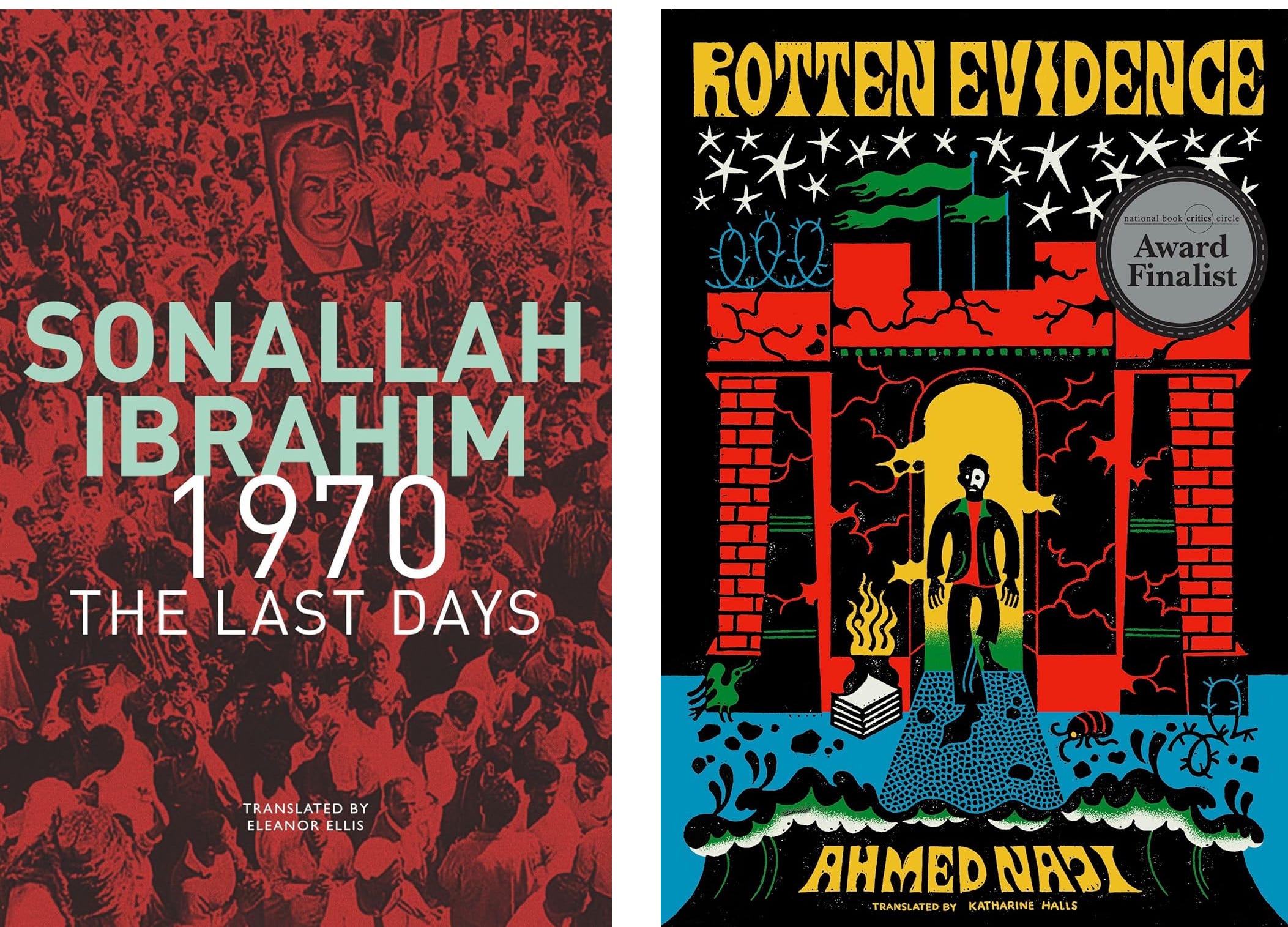
Ibrahim continued in this vein of confessional, diary-esque novels, oftentimes incorporating typed-up newspaper clippings and apparently found journal entries, and most often (although not exclusively) told from the perspective of male narrators of different ages. Among those works is the recently translated 1970: The Last Days, from 2020, which takes the former president (Nasser) as its main character. Harking back to his first work as a prisoner of his novel’s subject, Last Days constitutes a fictional diary/ memoir of the leader as he navigates the country through its 1967 defeat to Israel and the subsequent War of Attrition, ending with his final days and death. The novel is so tightly constructed around historical facts—real headlines, events, news clippings, advertisements—that it is hard, at times, to know where fictional details have been woven in. This is both its strength and its shortcoming—its strength as a historical document diminishes it as a work of imagination. Ibrahim’s attempts to capture the “inner” life and voice of Nasser don’t quite convince.
To read Last Days is more of an opportunity to reflect on the cyclical nature of history. The diary and newspaper entries could well speak of Egypt, and the world, today: worry about the price of meat, the stability of the US dollar, Egypt’s dependence on aid from Saudi Arabia, ethnic strife and police violence in the American streets, and, especially, on every page, the conflict with Israel and the contested status of Palestine and Gaza.
A more compelling claim to literary succession in the mudhakkirāt of That Smell is perhaps made by Ahmed Naji’s Rotten Evidence, Reading and Writing in an Egyptian Prison, which appeared in English last fall. Naji fled Egypt after serving nine months of a two-year sentence in an Egyptian prison on charges of “violating public modesty” for sexually lurid scenes in his novel, Using Life. His account of those nine months is as much a fascinating foray into prison life, with its bureaucracy and class structures (prisoners, too, become part of a social hierarchy, with cigarettes forming the currency of wealth and power behind bars), as it is a literary sequel of sorts to Ibrahim’s Last Days and That Smell. In Rotten Evidence, we learn that the status of Gaza remains unresolved, fifty years after Nasser’s death. Military rule endures Egypt, as does the US’s involvement in Egyptian affairs. Poverty remains widespread, even in the ranks of the security services. Naji is attentive to what prison guards complain about when given a piece of fruit or a cigarette. His close reading of the everyday life of a writer in an Egyptian prison shows a consciousness under stress. “I also follow Henry Miller’s advice and record my dreams,” he writes.
Keep reading with a 7-day free trial
Subscribe to Book Post to keep reading this post and get 7 days of free access to the full post archives.