
Notebook: Alt Writing II
Alt weeklies were natural critics of the media and establishments, natural workshops of a writer-driven style
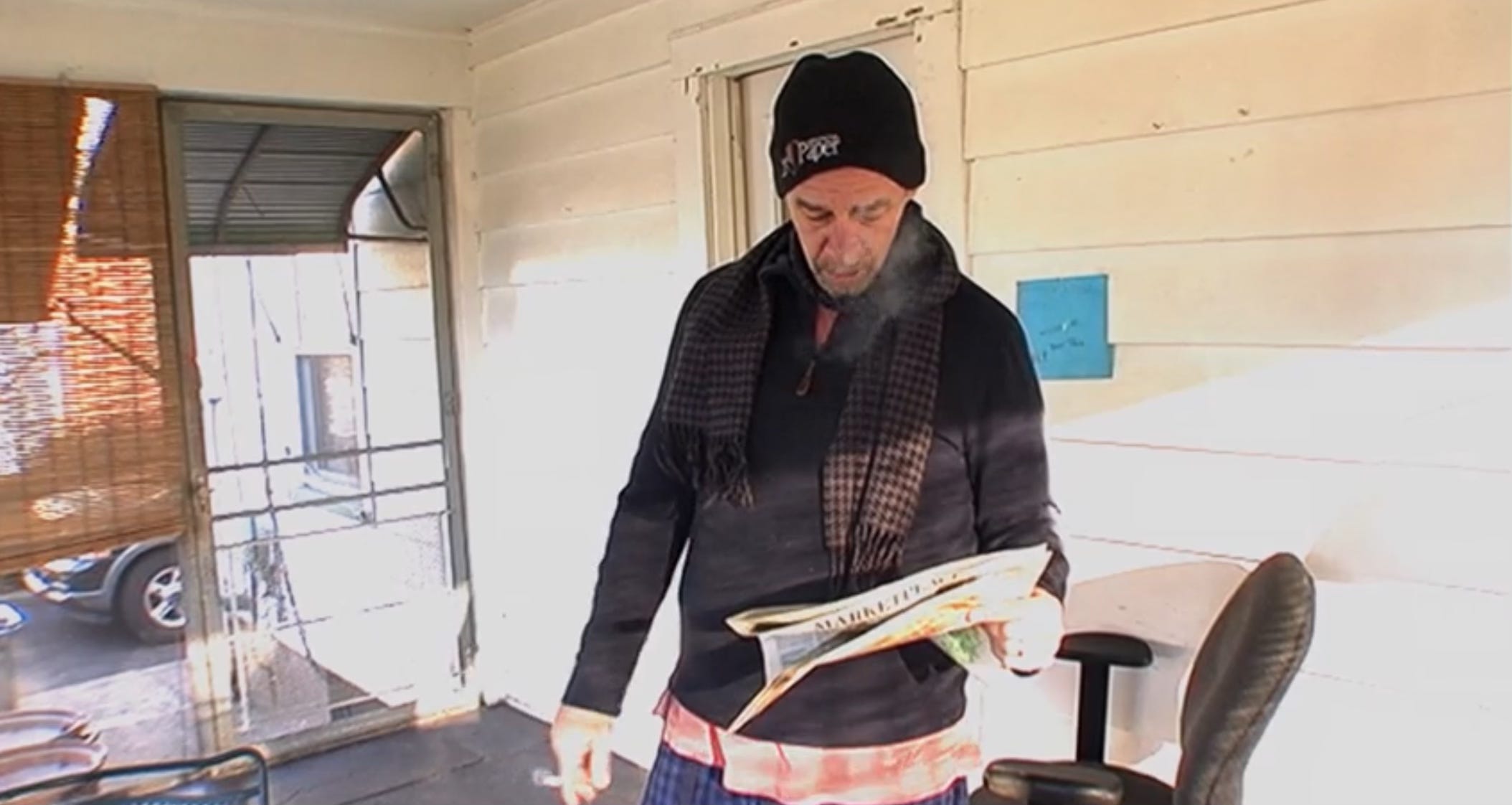
David Carr, from the documentary, Page One: Inside the New York Times. Salt Lake City Weekly editor John Saltas remembered of David Carr, “Smokers are moths, attracted to other smokers. Twenty years ago, there were lots of us blowing smoke, literally and figuratively, as we young lions, and lionesses, too, shared our successes and failures about this thing called ‘alternative journalism’ to which we were all wed. Editors, publishers, production artists, sales reps, it didn’t matter. So long as you smoked, you were welcome to join in any such spontaneous ‘board meeting’ where you might enter with a new idea for compensating distribution drivers and leave with a cover-story idea that worked in Cleveland.” David Carr is wearing a Washington City Paper hat.

Read Part One of this post here!
Perhaps the archetypal alt-weekly editorial trajectory was that of David Carr, who went from writing for Minneapolis’s Twin Cities Reader to editing the Washington City Paper and on to become a beloved and feared media critic for The New York Times, where he exerted, with a warmth and humanity—and improvisatory ferocity—that recalled his days close to the news’s sources on the streets, serious influence throughout the profession. Many stories about David Carr involve his being mistaken for a vagrant while on the job. He wrote a harrowing memoir of his years of addiction that he researched through third-person accounts, The Night of the Gun. His predecessor at City Paper, Jack Shafer, recounts that, as a reporter, “he used his guise the way an anglerfish uses the wriggling growth on its head to attract and then devour other fish.” David Carr ran City Paper during the flushest years of alt weeklies, from 1995 until 2001. It was reading, when he was mostly remembered as a bravura stylist and critic in his own right, about his efforts to recruit to City Paper young Black writers, including Ta-Nehisi Coates and Jelani Cobb, whom he hired as interns, that got me going on this subject. David Carr’s City Paper arts editor Glenn Dixon wrote of Ta-Nehisi Coates’s arrival at City Paper:
The parameters of the job were clear. You had to ask a novel question about your surroundings, whether literal or cultural, and you had to answer it as best you could. There was no template, no method. You were free to make your own approach. “That was huge for me,” Coates said in a recent interview. “I can’t imagine myself here right now without City Paper. I just can’t. I don’t know what would’ve become of me … I was not doing particularly well at Howard,” he continued. “I had not really done anything in my life up to that point that I’d been particularly successful at.”
But, Ta-Nehisi Coates remembers, David Carr was “looking high and low for storytellers.” Glenn Dixon continues that Ta-Nehisi Coates in part “credits his later success to the example of City Paper’s one-on-one, conversational, explicitly pedagogical editing, which he rarely saw in later years … ‘To take a twenty-year-old kid through a piece and say, “Listen, this is why this is not working.” People don’t really do that.’” Jelani Cobb told Glenn Dixon that long after he left City Paper, “‘it was Carr’s voice that would be in the back of my head’—make the follow-up call, find the new source, get the facts straight.” He described the key to making writing that mattered to the city from which it came as having “the opportunity to fail.” Jelani Cobb overcame his reluctance to join a paper that had been regarded locally as “a Bantustan of white entitlement” when he saw that under David Carr it was “willing to tell the stories that Black people were already telling themselves.” He quotes David Carr, “if magazines are going to be anything other than gossamer artifacts of declining interest, the people who run them might want to rethink how they employ their interns. Bringing on young people from all kinds of backgrounds is less a moral nicety than a business imperative.” As Glenn Dixon observes, if you’re worried about next generation of Ta-Nehisi Coates’s and Jelani Cobbs, you should ask if your newsroom looks so energetically for talent, gives them a paycheck, and offers them such freedoms and such comprehensive tutelage.

Interested in more Book Post Notebooks on the press? Here we are on book reviewing, and again on book reviewing, on content moderation and again on content moderation, on power and the press, on writing and war and again on writing and war, on billionaire owners, on threats to journalists, on magazines, and on writing and the internet
Susan Orlean also credits an alt-weekly editor for her self-discovery as a writer. “I became a real writer at Willamette Week,” she says in her recent memoir Joyride. Her editor Ronald Buel “believed we should aim for fairness and truthfulness rather than strict objectivity”: the limitations of an individual perspective are “part of the story, since they are part of the real human experience—the mess, the misinterpretation, the variation and imperfectible nature of perception … What matters in a piece of writing is to acknowledge the fingerprints the writer leaves on the story. That is what makes a piece of writing true.” “I never had formal training as a journalist,” she went on, “but what I learned from Ron made up for that.” Tristram Korten’s memories of his Miami Times editor Jim Mullin shared this philosophy: “We have to be fair. We don’t have to be objective.”
The narrative approach of the so-called New Journalists, to use the methods of literature to tell true stories and dramatize the author as a participating presence, was not invented in the alt weeklies but it was certainly developed and practiced there. Susan Orlean writes that when she began at Willamette Weekly “narrative nonfiction—what some people like to call ‘new journalism,’ or creative nonfiction—was in high season. Joan Didion, Truman Capote, Gay Talese, Norman Mailer, Hunter S. Thompson, and John McPhee.” She writes that she carried a copy of Tom Wolfe’s Electric Kool-Aid Acid test around for a year “and read sections at random over and over.” Vivian Gornick says in the recent oral history of The Village Voice, The Freaks Came Out to Write, “I learned early that ‘I’ was an instrument of illumination. I was not what it was about. I was to use myself to open the subject and to interact with it. There were a lot of people at the Voice who were doing that one way or another.” Matthew Lickona, managing editor of the San Diego Reader, discovered Joseph Mitchell’s Up in the Old Hotel as a teenager and describes how, after he started a literary magazine at his tiny college near Ojai, he got a call from the Reader’s founder, Jim Holman, who invited him to come to San Diego, stay at the Hotel Pensión for three months, and write whatever he wanted. When he got to San Diego he was given a pile of books: The Electric Kool-Aid Acid Test, Tom Wolfe’s Pump House Gang, Joan Didion’s White Album. (Jelani Cobb reports that David Carr gave the entire staff of City Paper copies of Up in the Old Hotel.) Matthew Lickona remained at the San Diego Reader for thirty years (Jim Holman sold it to him for a dollar last year). Tom Wolfe himself wrote a fan letter to the Chicago Reader in its first year: “The future of the newspaper (as opposed to the past, which is available at every newsstand) lies in your direction, i.e., the sheet willing to deal with ‘the way we live now.’” And of course it’s no coincidence that the ur-alt weekly, The Village Voice, was founded by Norman Mailer.
The fact that alt weeklies were funded by small advertisers offered sanctuary for writing that provoked politicians and local elites. Michael Mooney, speaking about his 2024 podcast Hold Fast, which tells the story of the New Times alt weekly chain (available only on Audible, ehem), remarks that the ad model was “democratized,” with “thousands of people buying ads,” so the papers were “not beholden to any specific advertiser.” Salt Lake City Reader’s John Saltas says, “we had no friends in the protected class that other media danced around, so we weren’t afraid of losing a lunch date if we did a story on the mayor or a banker.” Tristram Korten writes, the New Times could “describe a politician’s lies as lies.” Jeff Sharlet writes that alt weeklies were an
alternative to the daily newspapers published by men and women too often indistinguishable from the establishment they covered. Call it the franchise class: a political arrangement of lobbyists and electeds and suburban voters who dreamed of downtowns ‘cleared’ of all that might make a tourist uneasy … The alt weeklies were instead made by people who loved their cities as cities.
Alt-weekly reporters also came to stories with “years and years” of granular local coverage, as former SF Weekly editor emma silvers describes. Former Cleveland Scene writer Sam Allard testifies to the paper’s role as a voice of local history, reminding readers of the recent and not so recent past and pressing against a recurrent “amnesia” that afflicts local politics.
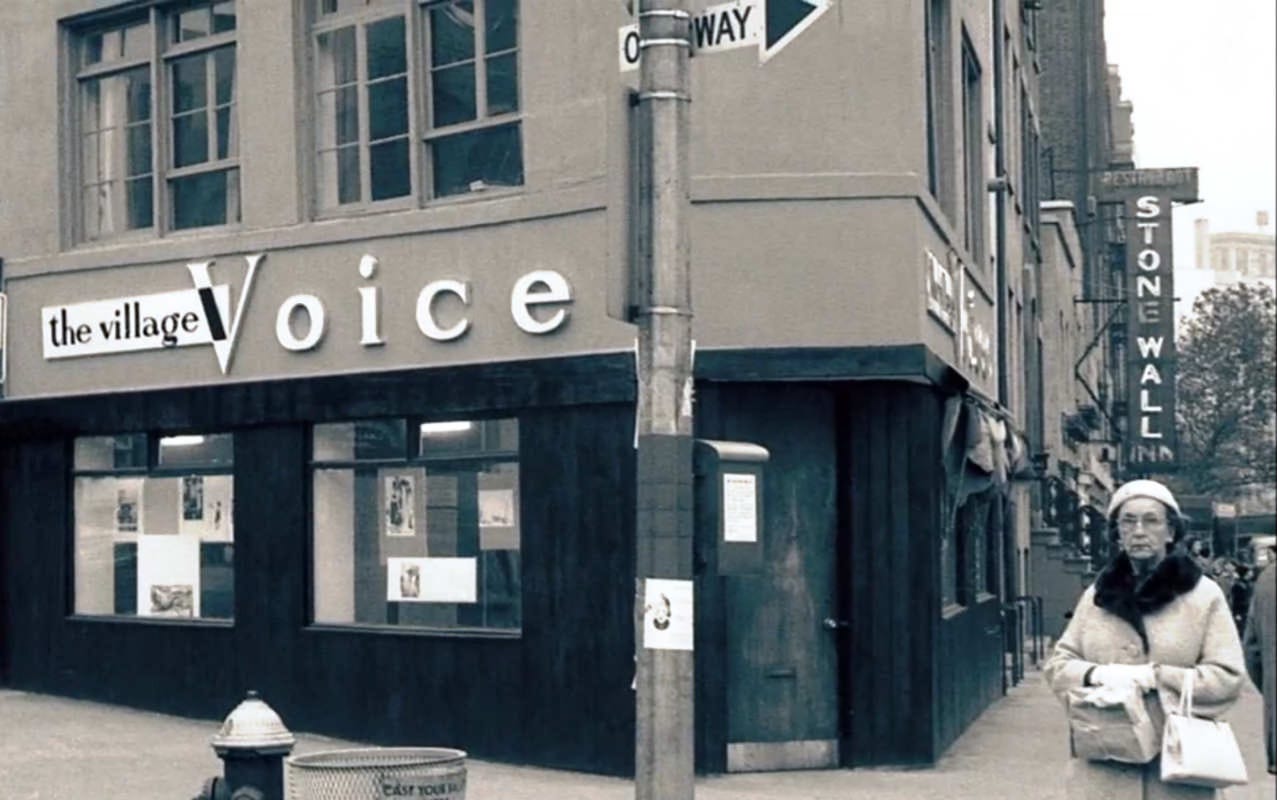
Emma Silvers remarks that Bay Area dailies generally refrain from critical coverage of tech elites. New Times’ flagship Phoenix paper advertised abortion services when they were illegal in Arizona; Susan Brownmiller describes being the first, in the Voice, to write about the abortions that women were having in secret and only beginning to talk about in feminist “speakouts.” (The famous male reporters at the Voice who covered city and national politics objected to this coverage of what they considered trivial domestic issues, but editor Dan Wolf was undeterred.) Gustavo Arellano writes, “in November 2004, I started ‘¡Ask a Mexican!,’ a column so politically incorrect that no other newspaper in the US would’ve ever dared imagine it.” (By the way, Gustavo Arellano, who we noted in Part One of this piece got his first gig at an alt weekly by writing a fake letter to the editor, was just nominated for a Pulitzer in opinion writing). Tristram Korten comments that “The alts were the first media to acknowledge that not everybody was straight”; as Jack Shafer puts it, “years before the New York Times dared to unsettle the powers that be by using the word ‘gay’ in its pages, alt-weekly writers wrote candidly about the gay and lesbian scenes.” The Voice, whose offices were on the same block as the Stonewall Inn (see below illustration), did on-the-scene reporting on the Stonewall Riots, though their coverage was immediately criticized as disrespectful.
The alt weeklies were, as many observers write, and David Carr labored to redress, for many years stubbornly staffed by straight white people, though they were ahead of the dailies in covering minority communities. The Chicago Reader ran a series of reports by John Conroy (“House of Screams”) on police torture that the daily papers took years to address; Jonathan Gold and Robert Christgau covered rap and hip-hop as serious art forms long before other white critics. Steve Bogira told Mark Jacob for his fifty-year restrospective of the Chicago Reader
I grew up on the southwest side near Midway Airport. I always had a chip on my shoulder about how the daily papers ignored the southwest side and blue-collar people generally. I think it was partly because my dad was a CTA mechanic and he used to take my brother and me on train rides around the city when we were small. I saw other neighborhoods that were poor and Black and I was interested in them. And when I was in journalism school I thought about how we on the southwest side might feel neglected, but it’s nothing compared to what it’s like for people who live in North Lawndale or Greater Grand Crossing.
Mark Lisheron speaks of “a deep suspicion of authority more than any particular ideology” that characterizes alt-weekly alumni like Jack Shafer, and the Hold Fast creators describe New Times founder Mike Lacey as a guy who was constitutionally “looking for trouble.” Their anti-authoritarian posture and position outside the media elite made them natural critics of the mainstream press. Several alt-weekly eminences, like Jack Shafer and David Carr and their City Paper successor Erik Wemple, left the alt-weekly-sphere to become media critics. Jack Shafer writes, “alt weeklies embraced press criticism before it was trendy and by doing so kept the dailies and local broadcasters on notice. In one sense, each issue could be read as a critique of the established daily, a reported account of its failings in covering government and power.” Mark Lisheron, then of a Texas government accountability website, wrote “the Shafer version of the Washington City Paper story is relatively simple. City Paper is an alternative weekly. Alternative weeklies make their living taking potshots at the major institutions in their cities.” Jay Boller, formerly of Minneapolis’s City Pages, speaks of “alt weeklies’ role as kind of a bullshit caller on big local media, the media critic aspect of being the bratty little sibling who can call out the daily newspaper when it is foolish or wrong or offensive or whatever … if you’re a daily newspaper person, you’re so fearful of the limited jobs available to you. It doesn’t make much sense for you to attack another publication. Alt weeklies are different.” As the major papers face less competition, there are fewer and fewer people to call them out in an informed way, to provide “criticism grounded in journalism,” as Mark Lisheron describes this informal ombudsmanship.
Stay tuned for (gulp) Part Three!
Ann Kjellberg is the founding editor of Book Post. Read more of her Notebooks on books and the reading life here. Paying subscribers can find her weekly Editor’s Notes in their emails or the Substack chat.
Book Post is a by-subscription book review delivery service, bringing snack-sized book reviews by distinguished and engaging writers direct to paying subscribers’ in-boxes, as well as free posts like this one from time to time to our followers. We aspire to grow a shared reading life in a divided world. Become a paying subscriber to support our work and receive straight-to-you book posts. Some Book Post writers: Ian Frazier, Joy Williams, Jamaica Kincaid, Lawrence Jackson, John Banville, Marina Warner, Álvaro Enrigue, Mona Simpson, Nicholson Baker, Colin Thubron, John Guare, Michael Robbins, more.
WordsWorth Books in Little Rock, Arkansas, is Book Post’s Spring 2026 bookselling partner. We partner with independent booksellers to link to their books, support their work, and bring you news of local book life across the land. We send a free three-month subscription to any reader who spends more than $100 at our partner bookstore during our partnership. To claim your subscription send your receipt to info@bookpostusa.com.
Follow us: Instagram, Facebook, TikTok, Notes, Bluesky, Threads @bookpostusa
This is just wonderful, Ann--thanks.
A tale worth telling, and exactly what we need now. Reminds me of "the Old Mole" in Harvard Square in the late 60's.